
Battery Storage Zuidbroek: Pioneering Energy Storage in Europe
Utrecht, Sunvest, October 15, 2025. Photo credits: Sunvest
Battery storage is Europe’s fastest-growing energy sector. Across the continent, experts predict explosive growth: Germany alone requires at least 40 gigawatts by 2030, while France targets 10 gigawatts and Belgium aims for 2 gigawatts of battery capacity. The Netherlands is accelerating towards 11.8 gigawatts – collectively representing a fundamental shift in how Europe manages its energy transition.
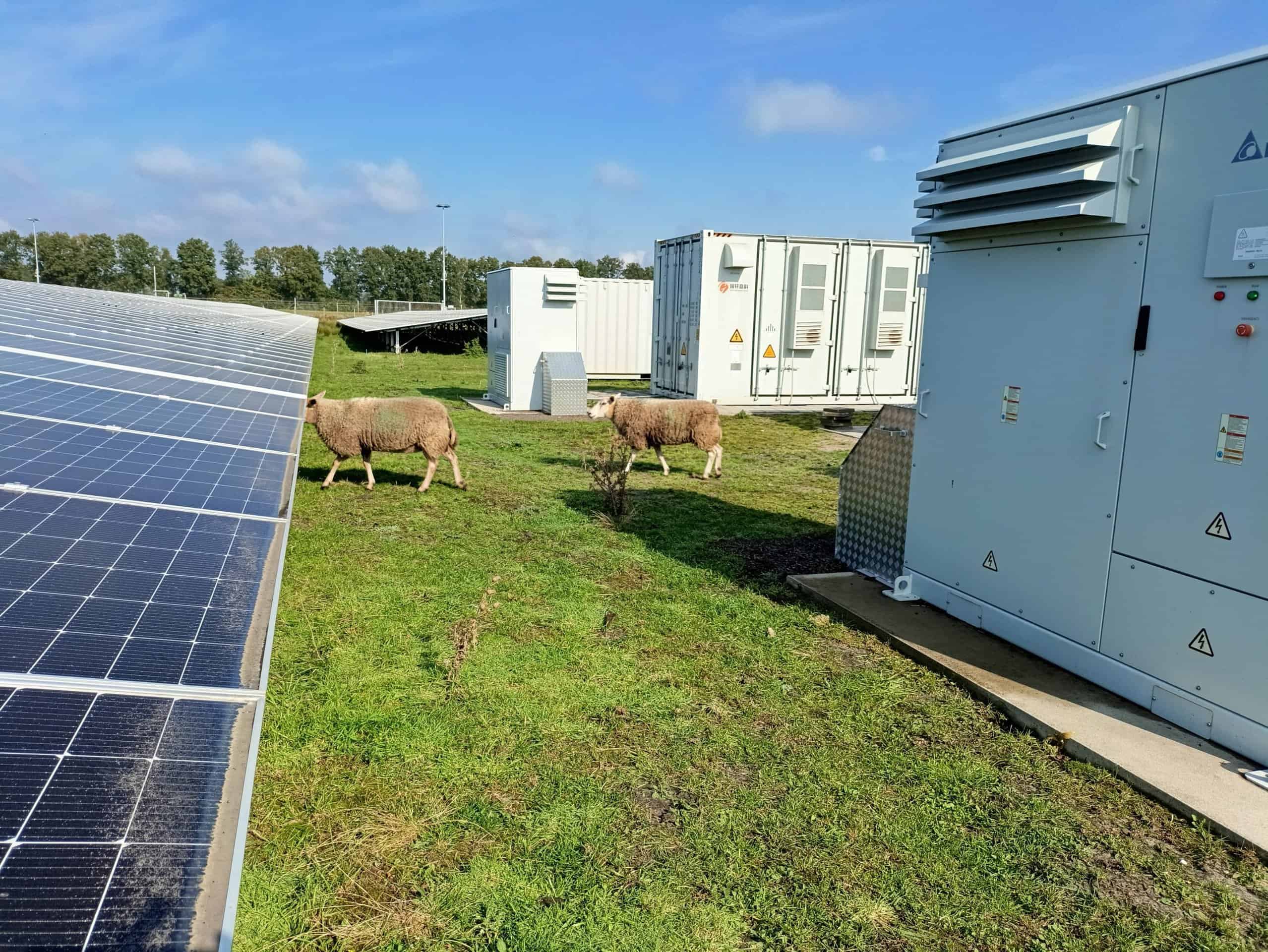
While this transformation unfolds, Sunvest took a decisive step in 2023: at Solar Park Zuidbroek along the A7 motorway in Groningen, Netherlands, we commissioned a 20 MWh Battery Energy Storage System (BESS) – equivalent to approximately 330 Volkswagen ID.3s. Combined with the 50 MWp solar park, this became one of the first utility-scale energy storage projects in the Netherlands and a reference installation for the European market.
Sunvest’s Standard: Solar Park + Battery Storage
At Sunvest, we develop and build all our solar parks with integrated battery storage as standard. This combination is not optional – it is fundamental to every project we undertake. Where other developers treat battery storage as an add-on, we have made it core to our business model. We know that renewable energy without storage is incomplete, and that battery systems are essential for a stable, future-proof energy infrastructure across Europe.
Why Battery Storage is Essential for Europe’s Energy Transition
The transition to renewable energy presents a critical challenge across all European markets: grid congestion and the intermittent nature of solar and wind generation. Solar parks produce abundant electricity during midday hours, while demand peaks in the evening. Wind energy is equally variable. This mismatch creates several problems:
- Grid congestion: In the Netherlands, Germany and Belgium, network capacity constraints are blocking new renewable projects
- Price volatility: Wholesale electricity prices can swing from negative during surplus hours to extremely high during scarcity
- System stability: European transmission system operators require flexible capacity to maintain grid frequency at 50Hz
- Curtailment losses: Without storage, valuable renewable energy is often wasted when production exceeds instantaneous demand
Battery storage solves these challenges by decoupling generation from consumption. It captures surplus renewable energy and releases it when needed most – directly contributing to grid stability, reducing curtailment, and accelerating the energy transition. For European markets facing mounting pressure to phase out fossil fuel generation, this flexibility is indispensable.
Technical Architecture
The battery system at Zuidbroek consists of compact, liquid-cooled containers housing LFP battery cells (lithium iron phosphate). This chemistry has become the global standard for utility-scale applications due to its superior safety profile, extended cycle life, and cost-effectiveness compared to alternative lithium-ion technologies.
Between the battery containers and the medium-voltage grid sits a Power Conversion System (PCS) – a bidirectional inverter that converts AC power from the grid to DC for battery charging, and DC back to AC during discharge. Response times are in the millisecond range, enabling participation in primary frequency response markets.
Battery control is managed through an advanced Energy Management System (EMS) that performs real-time optimization across multiple parameters: spot market prices (day-ahead and intraday), balancing market signals, grid congestion forecasts, and weather-dependent generation predictions. This multi-market optimization approach enables several parallel revenue streams:
- Energy arbitrage: Buying low, selling high on wholesale markets
- Frequency regulation: Primary (FCR), secondary (aFRR) and tertiary reserves (mFRR)
- Congestion management: Supporting transmission system operators during grid constraints
- Peak shaving: Reducing grid reinforcement needs and capacity charges
This sophisticated control strategy maximizes both economic returns and grid benefits – a crucial factor in securing project financing across different European regulatory frameworks.
Learning for Future Projects
The Zuidbroek project has been far more than a technical installation for us. It serves as our European reference facility where we built comprehensive expertise across the entire value chain:
- Optimal sizing ratios between generation and storage capacity for different market conditions
- Grid connection requirements and compliance procedures across different TSO/DSO frameworks
- Revenue stacking strategies across multiple European energy markets
- Operational best practices for lithium battery systems in utility applications
- Stakeholder management involving grid operators, balance responsible parties, and aggregators
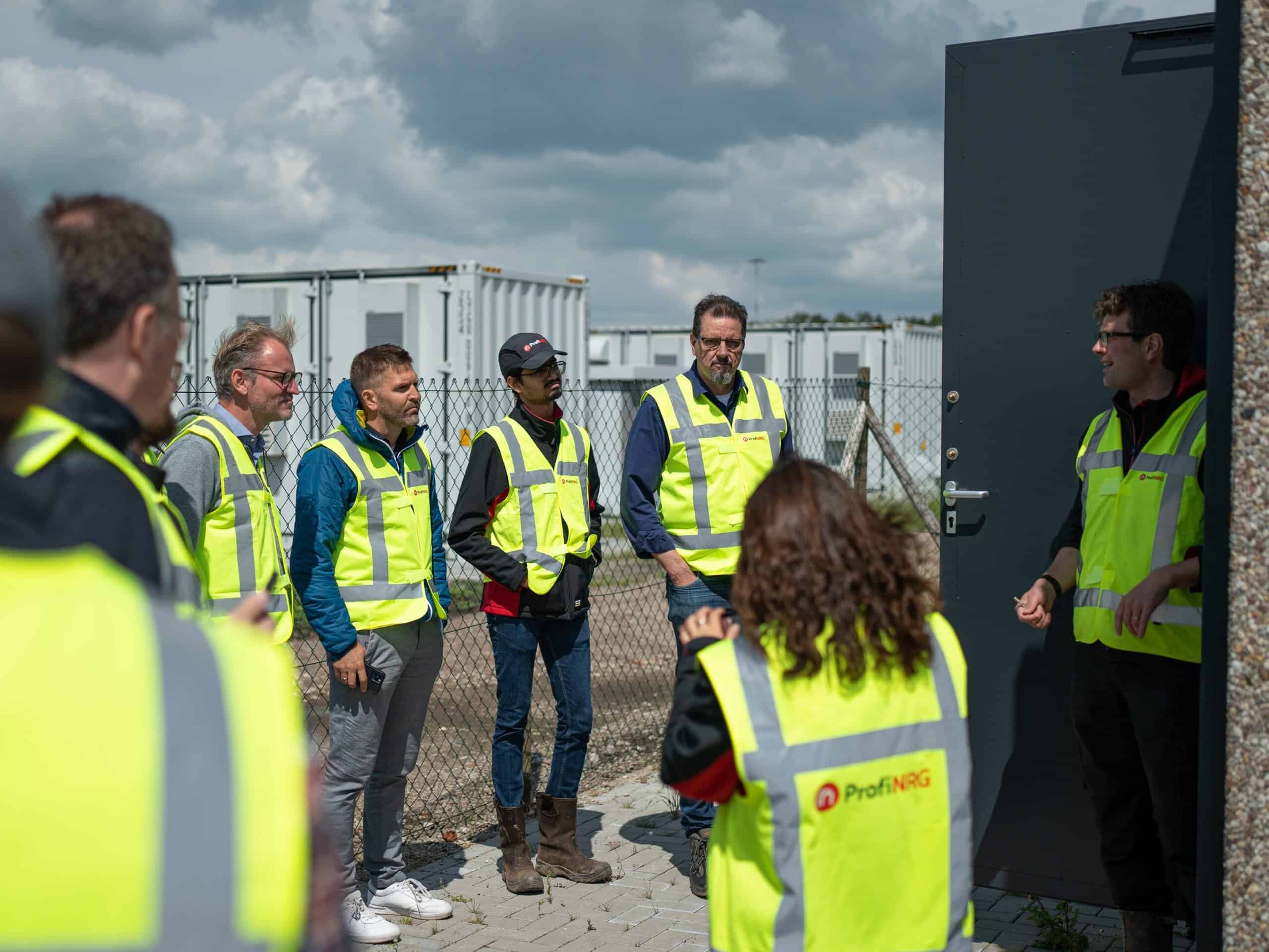
For project realization, we partnered with ProfiNRG, specialists in large-scale solar energy systems and battery storage with growing experience across Benelux and German markets.
Battery Storage as the Cornerstone of Tomorrow’s Energy System
At Sunvest, we are convinced that battery storage is not merely complementary, it is essential infrastructure for Europe’s energy future. That is why we make it standard, not optional, in all our developments.
Battery storage enables us to:
- Integrate significantly higher shares of renewable energy into the grid
- Resolve network congestion that currently blocks new projects
- Provide system services that maintain grid stability as conventional generation retires
- Capture and monetize energy that would otherwise be curtailed
- Support energy security and sovereignty across European markets
For our clients and partners across the Benelux, Germany and France, this means we deliver more than green electrons – we provide flexible, grid-responsive renewable capacity that actively supports the transition to a reliable, affordable, and sustainable energy system for all of Europe.